
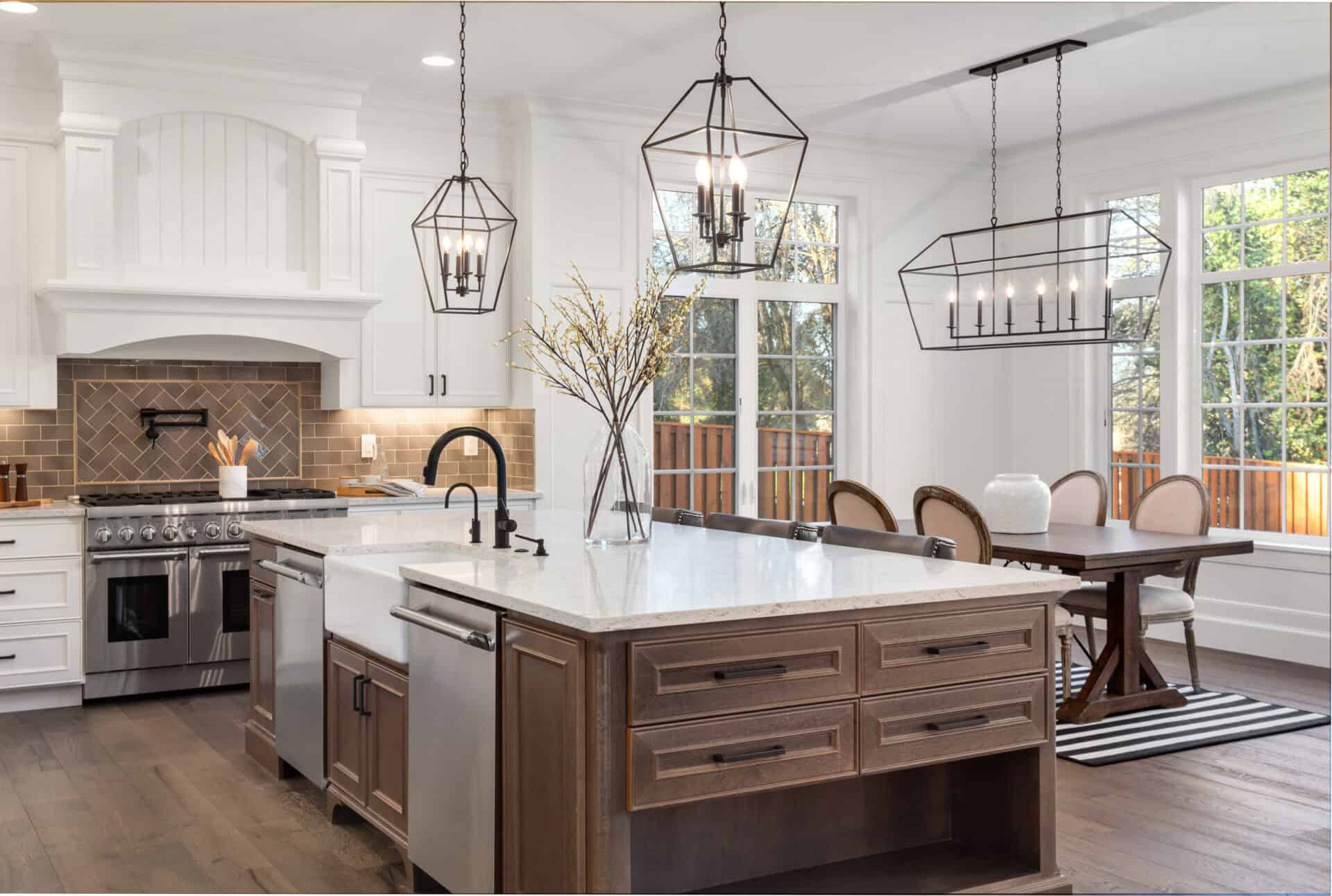
At Granite Planet, we’ve spent years working hands-on with natural stone, and granite in particular remains one of the most impressive and challenging materials we deal with. Granite is incredibly strong, beautifully unique, and built to last for decades, but that strength also means it demands respect when it comes to cutting and shaping. Many homeowners are curious about how granite worktops are cut, especially when planning a kitchen renovation or seeing a worktop being fitted for the first time. In this blog, we’ll explain how granite worktops are cut, what’s involved behind the scenes, and why experience and the right equipment matter so much.
Granite worktops are a popular choice across Scotland, and we regularly install granite worktops in Glasgow for homes ranging from traditional tenements to modern new builds. What many people don’t see is the level of planning, precision and skill required long before a granite slab ever reaches your kitchen. Cutting granite is not like cutting wood or laminate. It’s a specialist process that requires professional tools, careful handling and a deep understanding of the stone itself.
Understanding the Nature of Granite
Granite is a natural igneous stone formed under extreme heat and pressure over millions of years. This process creates a dense, hard surface with natural variations in colour, crystal structure and veining. These natural characteristics are what make granite so attractive, but they also make it unpredictable. One slab may behave slightly differently from another, even if they look similar at first glance.
Because granite is so hard, it cannot be cut with standard household tools. Attempting to do so almost always results in chipped edges, cracked slabs or serious safety risks. The stone’s density means that any cutting process must be slow, controlled and supported correctly to avoid stress fractures. This is why professional stone fabricators treat each cut as a precision task rather than a simple adjustment.
Planning Before Any Cutting Takes Place
Before a single cut is made, careful planning is essential. At Granite Planet, every granite worktop begins with detailed digital templating. This process involves taking exact measurements of your kitchen, including walls, cabinets, appliances and any irregularities in the space. In older UK properties, especially, walls are rarely perfectly straight, which makes this stage critical.
The template allows us to plan where every cut will go, including edges, corners, sink cut-outs and hob openings. Granite cannot be trimmed easily once cut, so accuracy at this stage prevents costly mistakes. We also consider the natural pattern of the stone, ensuring that veining flows naturally across joins and that the most visually appealing areas of the slab are used in prominent positions like islands or breakfast bars.
How Granite Is Cut in a Professional Setting
Granite is cut using specialist machinery designed specifically for stone. In a professional workshop, large bridge saws fitted with diamond blades are commonly used. These blades are embedded with industrial diamonds, which are hard enough to cut through granite cleanly. Water is used constantly during cutting to cool the blade, reduce dust and prevent the stone from overheating or cracking.
The cutting process itself is slow and deliberate. Rushing a cut can cause micro-fractures that may not be visible immediately but can weaken the stone over time. Each pass of the blade is carefully controlled, and the slab is fully supported throughout to reduce stress. This level of control simply isn’t possible with DIY tools, which is why cutting granite at home is rarely recommended.
Cutting Sink and Hob Openings
One of the most delicate parts of cutting a granite worktop is creating openings for sinks and hobs. These cut-outs require absolute precision, as even a few millimetres can make the difference between a perfect fit and a ruined slab. The corners of cut-outs are especially vulnerable, as sharp internal corners can concentrate stress and lead to cracks.
To prevent this, professional fabricators use rounded internal corners and carefully controlled cutting techniques. The edges are then smoothed and reinforced where necessary. This is also why sink and hob manufacturers’ specifications are always followed closely. A granite worktop must not only look good but also support the fixtures it holds without risk of damage over time.
Edge Profiling and Finishing
Cutting granite is only part of the process. Once the slab is cut to size, the edges must be shaped and finished. Edge profiling transforms a raw cut into a smooth, refined finish that’s safe to touch and visually appealing. Whether the edge is straight, subtly rounded or more decorative, it requires careful grinding and polishing.
This finishing process is done in stages, using progressively finer abrasives to achieve a smooth surface that matches the polish of the main worktop. Any inconsistency at this stage will be visible once installed, especially under kitchen lighting. A well-finished edge is one of the key signs of high-quality craftsmanship and is something we take great pride in at Granite Planet.
Why On-Site Cutting Is Rarely Ideal
Homeowners sometimes ask whether granite can be cut on-site during installation. In most cases, the answer is no, or only very minimal adjustments. Cutting granite generates significant dust, noise and vibration, and even with water suppression, it’s not suitable for a domestic environment. More importantly, on-site cutting increases the risk of damage to the slab and surrounding surfaces.
That’s why the vast majority of granite cutting is done in a controlled workshop environment. By the time your worktop arrives at your home, it should already be fully cut, finished and ready to install. Any final adjustments are usually limited to minor positioning rather than actual cutting.
The Risks of DIY Granite Cutting
It’s understandable that some people consider cutting granite themselves, especially when trying to save money during a renovation. However, granite is not forgiving. Without the correct tools, experience and safety measures, DIY cutting can lead to serious injury or irreversible damage to the stone. Granite slabs are extremely heavy, and improper handling alone can cause cracks or accidents.
Even small mistakes, such as uneven pressure or incorrect blade speed, can ruin a slab worth hundreds or thousands of pounds. In our experience, many DIY attempts end up costing more in the long run, as damaged stone must be replaced entirely. That’s why we always recommend working with experienced professionals when it comes to granite.
How Experience Makes the Difference
Cutting granite is as much about understanding the material as it is about using the right equipment. Experienced fabricators know how different types of granite behave, where natural weaknesses may lie, and how to work with the stone rather than against it. This knowledge comes from years of hands-on work, not just technical training.
At Granite Planet, we approach every granite worktop as a bespoke project. No two slabs are treated the same, and every cut is planned with both aesthetics and structural integrity in mind. This is especially important for larger kitchens, islands and complex layouts where multiple pieces must join seamlessly.
Granite Cutting and Installation Go Hand in Hand
A perfectly cut granite worktop still needs to be installed correctly. Poor installation can undo even the best fabrication work. During installation, the worktop must be supported evenly, levelled precisely and secured without placing stress on the stone. Joins must align cleanly, and sealants must be applied correctly to protect against moisture.
Because cutting and installation are so closely linked, we handle both processes in-house. This ensures consistency from start to finish and gives our customers peace of mind that their worktop is being looked after at every stage.
Why Professional Cutting Protects Your Investment
Granite worktops are an investment in your home. They add value, durability and timeless appeal, but only if they are fabricated and installed properly. Professional cutting ensures that the stone retains its strength, its beauty and its longevity. It also means that any warranties or guarantees remain valid, which is rarely the case with DIY modifications.
When you choose a professional team, you’re not just paying for the cut itself. You’re paying for expertise, precision, safety and the confidence that your worktop will stand the test of time.
Final Thoughts from Granite Planet
Understanding how granite worktops are cut gives valuable insight into why quality craftsmanship matters so much. Granite is a remarkable material, but it demands skill, patience and respect. From careful planning and precise cutting to expert finishing and installation, every stage plays a role in the final result you see in your kitchen.
At Granite Planet, we’ve built our reputation on doing things properly. Whether we’re supplying granite worktops in Glasgow or working on projects further afield, our focus is always on delivering exceptional quality and lasting results. If you’re considering granite for your kitchen and want it handled the right way, our team is always happy to offer advice, guidance and professional support. A beautifully cut granite worktop isn’t just about technique—it’s about experience you can trust. Contact us today.